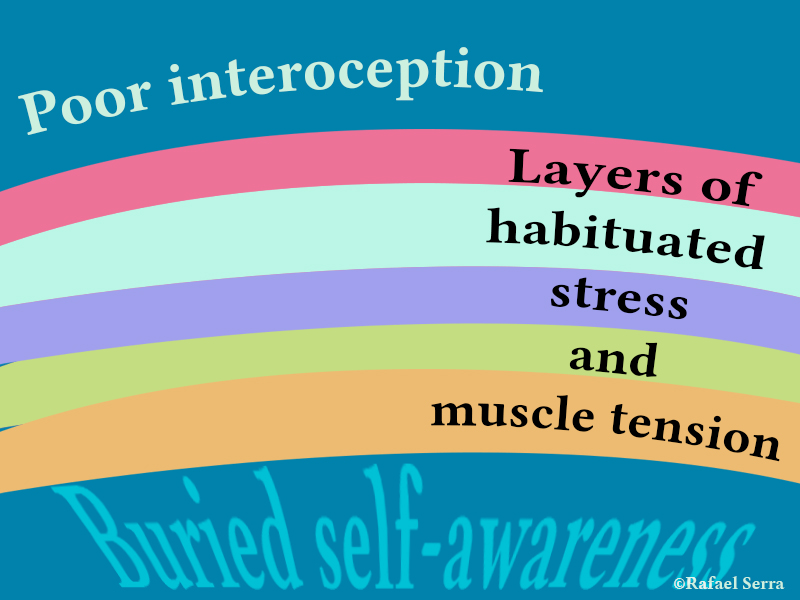
The schizoid position is a structure that is formulated from a formative position which means the person has built their character layered with preconceptions and 'baselines' which are essentially pathological and used to accept stress and poor standards as normal.
There is often a moral bent that exacerbates the schizoid rigidity. The grandiosity also leads to a specific stubbornness that leads the individual to be very contumacious in setting their standard of operation.
Schizoids are not people that position themselves reactively - they are their own standard. And they are stuck not having the words to articulate their needs, nor do they generally have the tact to manage people and their demands and emotional rollercoasters.
Schizoids are self-contained. They have a philosophy of occupying their space non-intrusively to others, albeit they understand the need to mark their territory and defend it.
The reality schizoids have been pushed to integrate consciously is that the body has needs no one else can understand nor defend but we ourselves, and there are strict limits for idealism that the structure of the body can't overcome at the cost of structural collapse.
See, society is organized around social scripts, traditions, social commerce, life stages, and all kinds of demands and expectations. But the schizoid is in a limit state of energy conservation. This person is aiming to find solutions that can alleviate their own suffering, their own tensions and stress; and they are most often dealing with the consequences of extreme stress - namely, dissociative states, depression, anxiety, etc.
It's very complicated to communicate subjective experiences. More so when the person is underdeveloped and is dealing with what life throws at them. Yet, the schizoid, like any other human being, needs to selfguard himself for the sake of his own survival.
There is a collective narrative - like a sea of stories - that comprises the human drama. And people must insert their own survival within this drama by adding onto it and acquiring a script others can follow, as well as a script that can serve them - aligning body, relationships, and reality.
This is of importance to survival but also to physical and mental health. Because scripts inform our identity, and having an identity stabilizes us. If we're always switching identity because it's being constantly updated then that leads to imense distress and unpredictability.
The discrepancy between these three leads to what many schizoids describe as 'masking', which leads to dissociative states. Many schizoids withold information to secure their mental stability and not allow other people to use information against them - be it as a power maneuver or a shaming tactic.
Schizoids are highly uncomprehended and that adds another layer to masking, as it serves a parsimonious use of their mental resources which are already scarce.

What lies behind schizoid presentations is a 'schism'. As the word suggests the schizoid creates a schism between mind and body.
It may start, formatively, as a consequence of falling and catering to others, but it soon becomes a mental model that has a level of mismatch from reality.
I wouldn't go so far as to call it psychotic, as many people have similar mismatch; it's just that the schizoid was more damaged and pressed by society than the average individual.
Conversely, this pressure creates a rigid mental and behavioral structure that turns the schizoid into a very contained, lethargic, controlled, tense, and even angry individual. The pressure is too much.
This is very complicated to impart to others; not only because they don't care, but also because it's too complicated to articulate to the average person, let alone have them accomodate the schizoid individual in their difficulties.
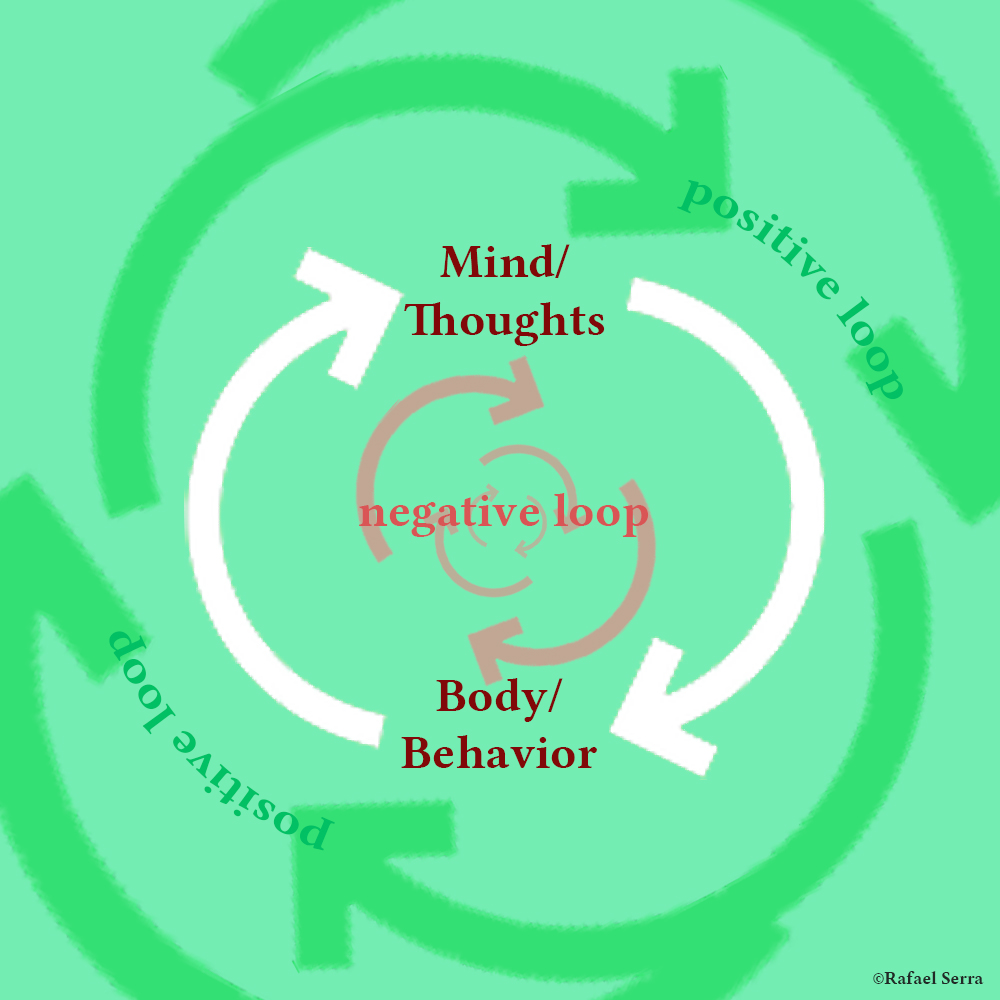
The schizoid position all it breeds is stress. And stress dissociates the individual further. Not just in terms of losing track with reality and falling immersed in mental movies, and fantasy defenses, but also in terms of losing memory, having writting gaps that are not noticed, not being in touch with their emotions, dissociating all kinds of pains and tensions through an inverted hedonic treadmill.
This dissociative state has feedback and feedforward loops that not only reinforce a specific symptomatology but also escalate the causes both of physical states (i.e. tension) and of psychological states (i.e. dissociation, derealization, depersonalization, and so on).
Constant mental and physical overwhelm leads to further and further interoceptive problems. This means the schizoid individual begins to lose track of his own sexuality (not identity per se, although that too), and of his sexual health.
It's hard to say what's what, but the majority of schizoids report having next to no libido, while the the remainder portion report an even higher sexual intensity than normal.
Both hypo and hyper sexuality are a byproduct of high stress levels. And this leads the individual to either completely dissociate himself from their own eroticism, producing physical lethargy, or become too sensitive to sexual cues.
The true problem of such a high eroticism is that every relationship leads to engulfment anxiety. But the state of tension is such that the subjective experience always leads to an erotic dimension. And as people we can't project our own sexuality across the board. Not only are some relationships innapropriate, others may not be adaptible, and even others may just be overwhelming.
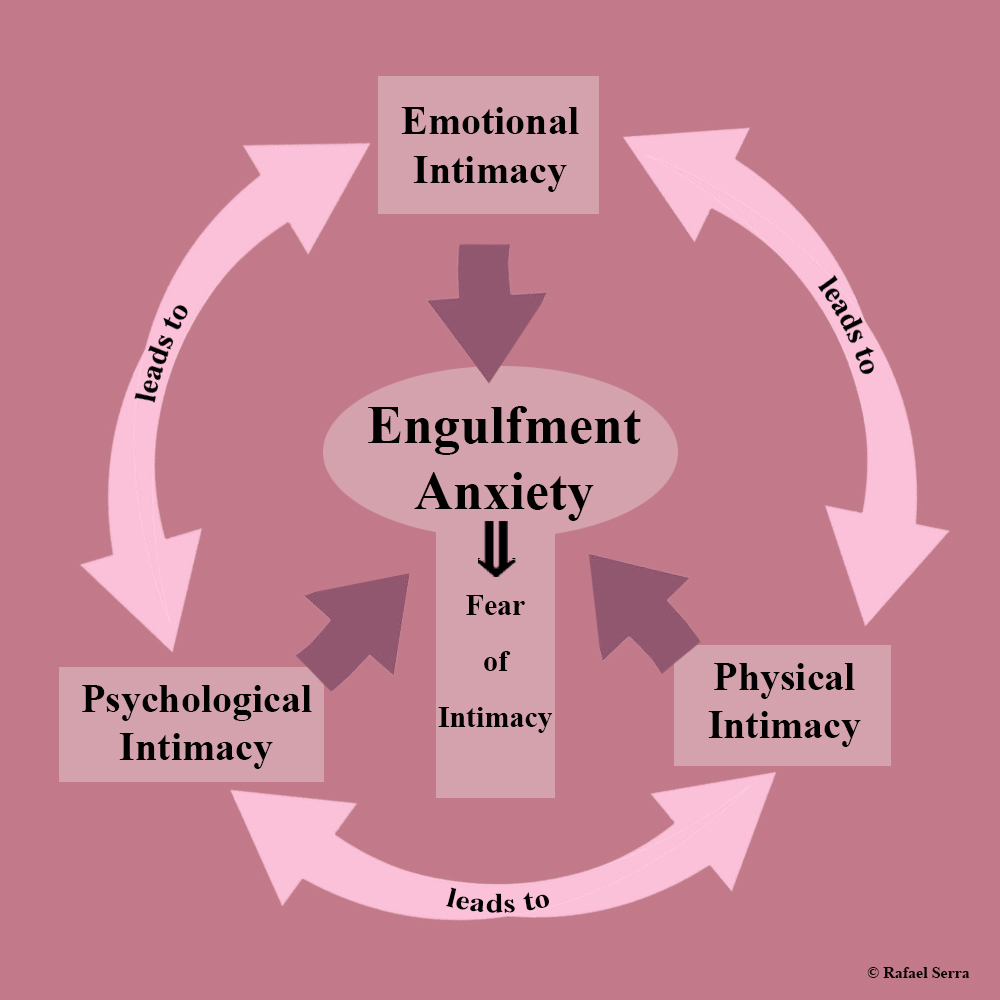
What's being pointed out is that sexuality occupies mental energy and mental space. And in order to live a productive life a person needs to be stable.
This seems like such a self-evident statement to make, but family systems where schizoids surface are pathological all around.
The schizoid is the most pressured person in the family system; it's the person that has to reduce themselves the most because others are not able to.
This is probably the same that happens to borderlines, although borderlines cross the border into psychotic states, whereas the schizoid maintains reality-testing abilities.
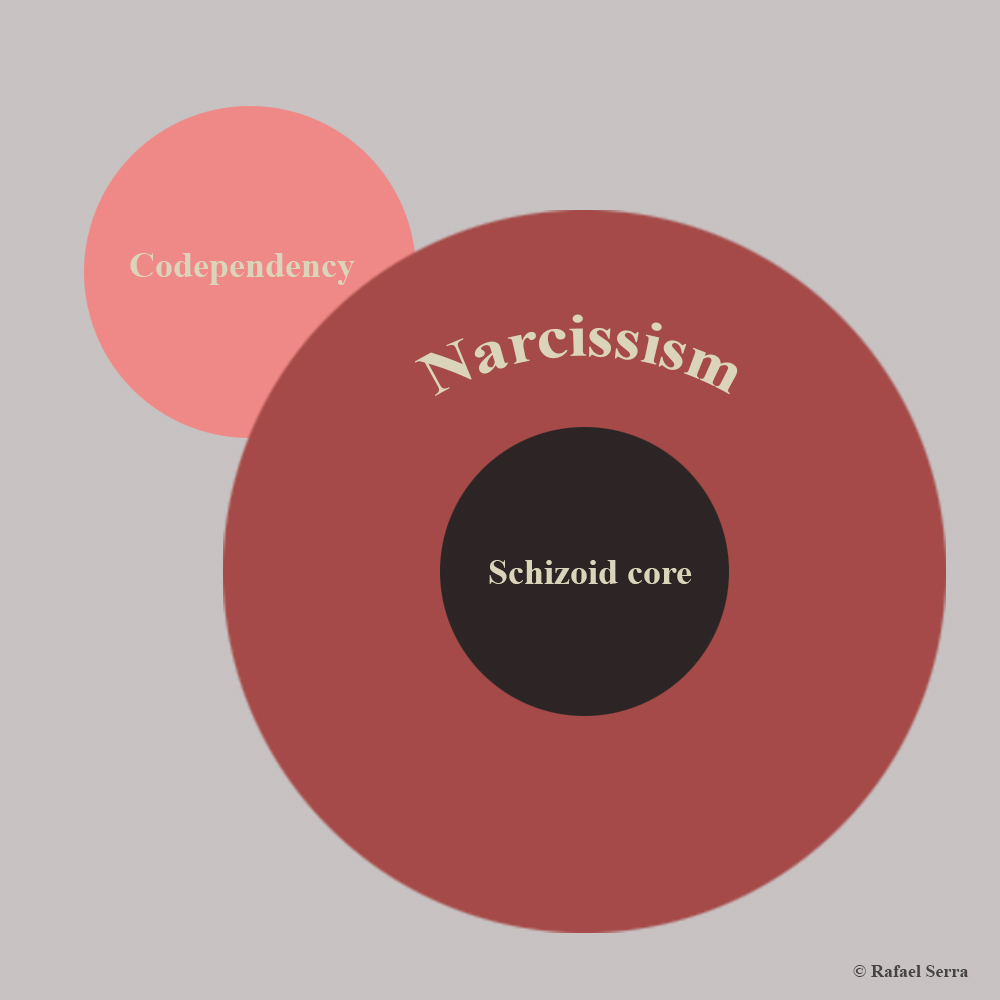
The schizoid position is a state that isn't exclusive to individuals diagnosed with the personality disorder. It's theorized by psychoanalytic fields that narcissists can also enter schizoid positions during 'narcissistic collapse'.
What this shows us is the character of extensive stress that is put on the schizoid individual.
This lays bare that many personality disorders are likely only surface ossified personality structures due to CPTSD.
Each personality disorder would be therefore a stress induced attempt to emotionally regulate that was built - often in the formative years - and has ossified in a maladaptive structure.
Symptoms like confabulation, hypervigilance, catastrophizing, lying pathologically, being grandiose, among others, are indicative of maladaptive psychological structures and are disproportional to the state of affairs.
Exaggerated displays of emotionality are toxic to the person and everyone around them. Not only they make the nervous system overreactive, but they also stress others which will lead to escalation.
This is extremely pernicious for obvious reasons. And it may lead to codependent-esque solutions like entrainment, enmeshment, and people pleasing, as well as the different flavors of dissociative states, with the accompanying muscle tension.
The muscle tension is an aspect of psychological study that is much neglected.
There is a tendency to split the mental landscape and the physical state and this leads to having patients run in circles in their own mental labyrinths.
This can be very damaging for patients such as schizoids because their life situation is already one of extreme stress and it can move on to a stage of complete dysregulation leading patients to either break away from reality or explode with violent reactions.
The damage the mental illness (not health apparently) fields are doing is insurmountable. It's not outcome based. And it keeps patients walking a line where for every breadcrumb they get two others taken back.
Not only there are ideological positions being injected in patients already living a suggestible state, but this breadcrumb dynamic puts patients in a codependent relationship that serves the therapists' profits to the detriment of the patient's best interest. It's an evident case of a conflict of interest and therapists being the gatekeepers of mental health.
In no other field do we see this phenomena.
Yes, there are a lot of markets where people bargain and negotiate, but this crosses a line of ethical boundaries because it has to do with the mental health of patients - or their mental illness.
For those that know the ins-and-outs of the mental health fields it's very noticeable the amount of students that approach education in these fields as an attempt to find solutions for themselves and fix themselves. This makes it clear how many people with diagnosable behavioral disorders you can find playing the role of therapists.
Imagine if an oncologist had a cancer cure and gave it out in subscriptions or witheld it? Imagine if food was being hidden from counters by people that knew there was still food in stock?
This all may seem a bit hyperbolic, and I'm not arguing all practicioners are unethical, but I think the line blurs due to self-interest, incompetence, or machiavellism more than people imagine or care to admit.
There's a mentality in some therapists that psychotherapy is supposed to be regular, but some studies point out that one of the hallmarks of mental illness is talking about oneself excessively ("I, I, I"). It's all too self-focused, too mentally focused (instead of somatically), and having psychological wounds and memories too frequentely revisited and reinforced, thus re-experiencing the same emotions.
It's too much.
A common phrase in neuroscience is that 'neurons that fire together wire together'. And this is not only relevant from an emotional standpoint but also a somatic one. If the nervous system is constantly being stressed when it's already in a limit state that is likely to lead to either an overreaction (anger, panic attacks, dissociation, etc) or to a 'crash' (depressive episodes, avolition, anhedonia, etc).
This isn't to say there isn't a relevant case in exposure therapy and attempt to slowly change how the nervous system 'somatizes' emotions, psychological states, and process trauma. But the line has to be carefully navigated and I'm not sure most therapists can walk that line without dysregulating their patients.
The key issue is that a person's life - body, mind, and 'heart' - is subject to a very complex subjective experience which is very hard to impart and very complicated for therapists to have access to and manage without making mistakes.
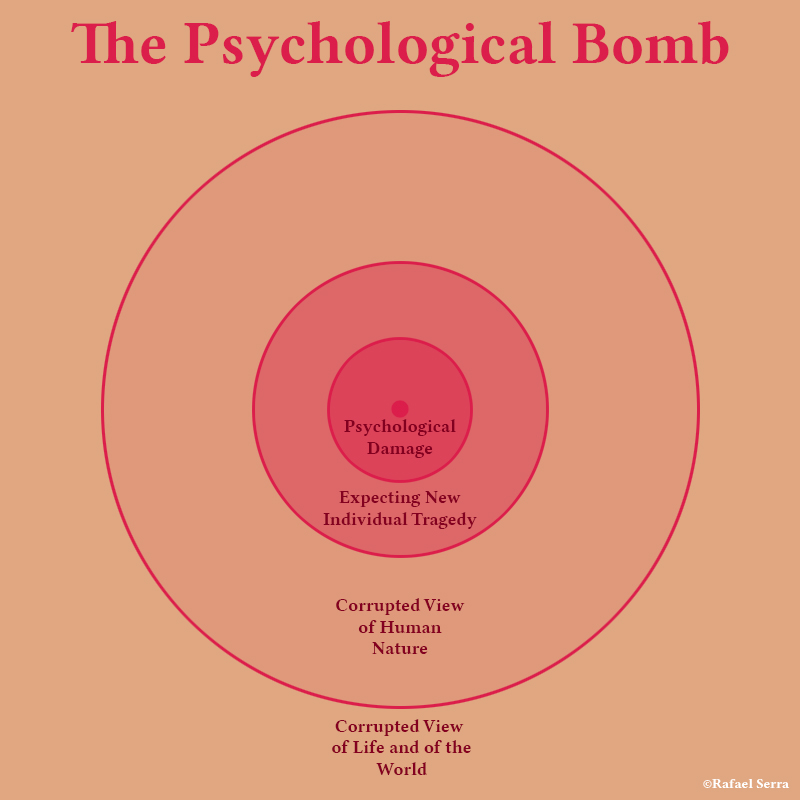
Mentally ill patients are in their most vulnerable selves and any extra dose of stress should be carefully entertained.
The schizoid state is the end of the traintrack. It is a state of maximum exigence and minimized cost. An individual cannot hold past it without psychotic states or delusions.
Another relevant topic to bring up in reference to the schizoid state is that, since the nervous system is so overwhelmed, 'small' things take on a bigger character and influence to the person's life.
Namely, the individual is already too bottled up that every sensory cue starts being an irritant and giving a much more salient subjective experience.
Sounds become louder; sensibility to temperature increases on both ends; light starts hurting, especially in stressful environments; crowds can become too possibility inducing; and the schism increases in split as the individual mentally retreats to his inner 'homunculus' subjective experience (like a little man inside his body-machine).
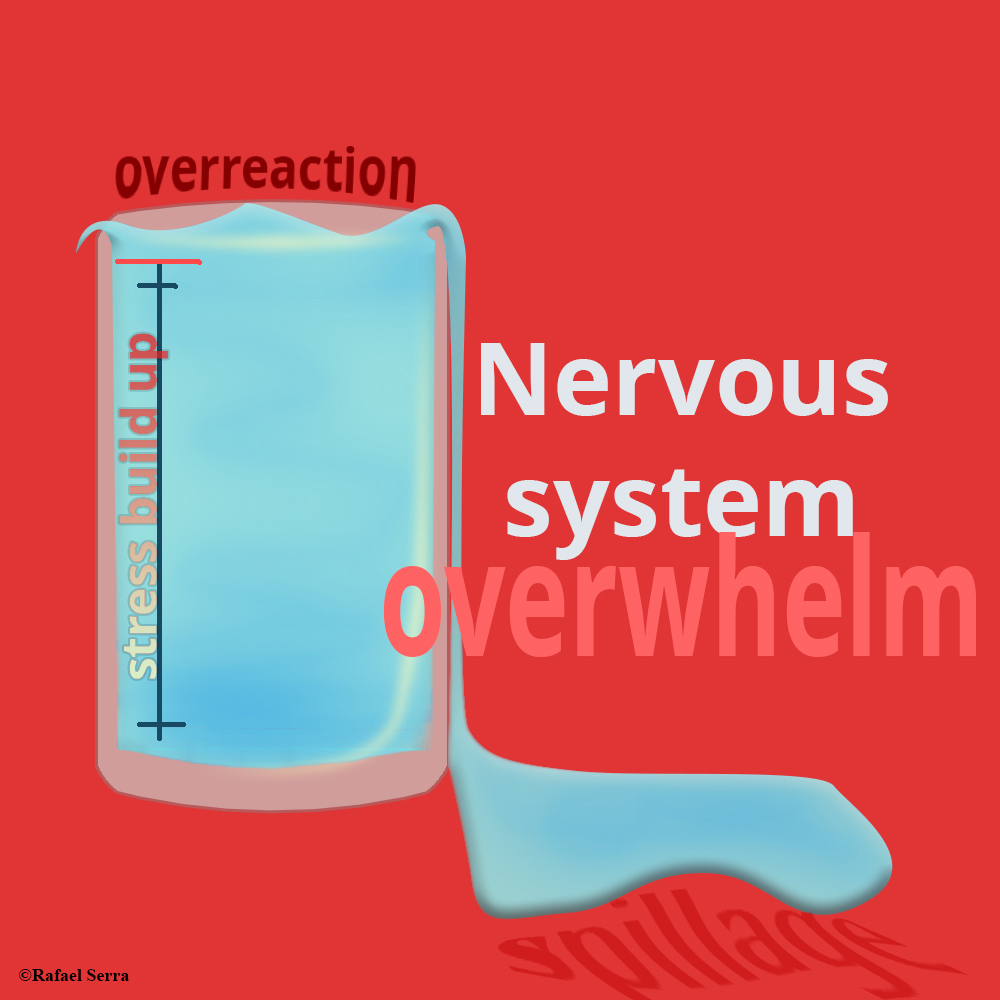
A great difficulty schizoids face is interoceptive self-awareness. I can't quite make out a rule-for-all, but in my experience there is a great difficulty maintaining focus in bodily sensations and taking care of those functions in a measured way. Conversely, the schizoid constantly forgoes their bodily needs and sense of presence, at the cost of self-care and self-preservation; and in turn they develop a much more conscious awareness of their surroundings - in terms of 'sensa', and in terms of managing people's narratives.
Schizoids are not 'control freaks' but they are 'freedom from' invested. Because whether or not they are consciently aware the people, spaces and contexts have very distinctive effects on the schizoid's ability to emotionally regulate, which they may overlook. The cerebral nature of schizoids has them think in terms of outcomes and configurations of variables, and not so much about how it makes them feel emotionally and sensorially. Emotions are often neglected and schizoids often take on a robotic or machine-like mindset. Ideas like 'optmization', 'efficaciousness', 'discipline', 'truth', are often concepts that are embodied by schizoids because it gives a sense of control, it allows focus on reality testing abilities, and creates structure. But the cost is mental rigidity, black-and-white thinking, hot and cold behavior, and a very difficult stubborness to manage that leads to not ask for help or establish healthy and lasting human connections.
The poor interoceptive focus leads the schizoid to be constantly dysregulated and to be a lousy manager of human connections, situations, and dialogues. Much like narcissists, schizoids can be very sensitive to criticism. But unlike narcissists, schizoids have the flat affect they use to mask their feelings with. The flat affect is a curious thing, because it's usually a mixture of mental and physical exhaustion, and a minimum information poker face to make sure other people do not take advantage of their affects, moods, and thoughts, thus not to be emotionally manipulated. Schizoids attract pathological personalities like magnets attract magnetized metals. The schizoid often doesn't have great abilities to give other people boundaries without either being too soft or too hard, and also the schizoid has usually been dealing with such characters since childhood, so they are both desensitized and they have experience with such pathological personalities.
A life of dysregulation leads the schizoid individual into a constant state of tension, rummination and difficulty of leaving erratic mental states. This heightens the split where mentalization is increased through cognitive catrastrophization, playing mental scenarios and conversations, going through old memories, and becoming somatically consumed as the back and forth between mind and body creates a feedback and feedforward escalation of negative emotions.
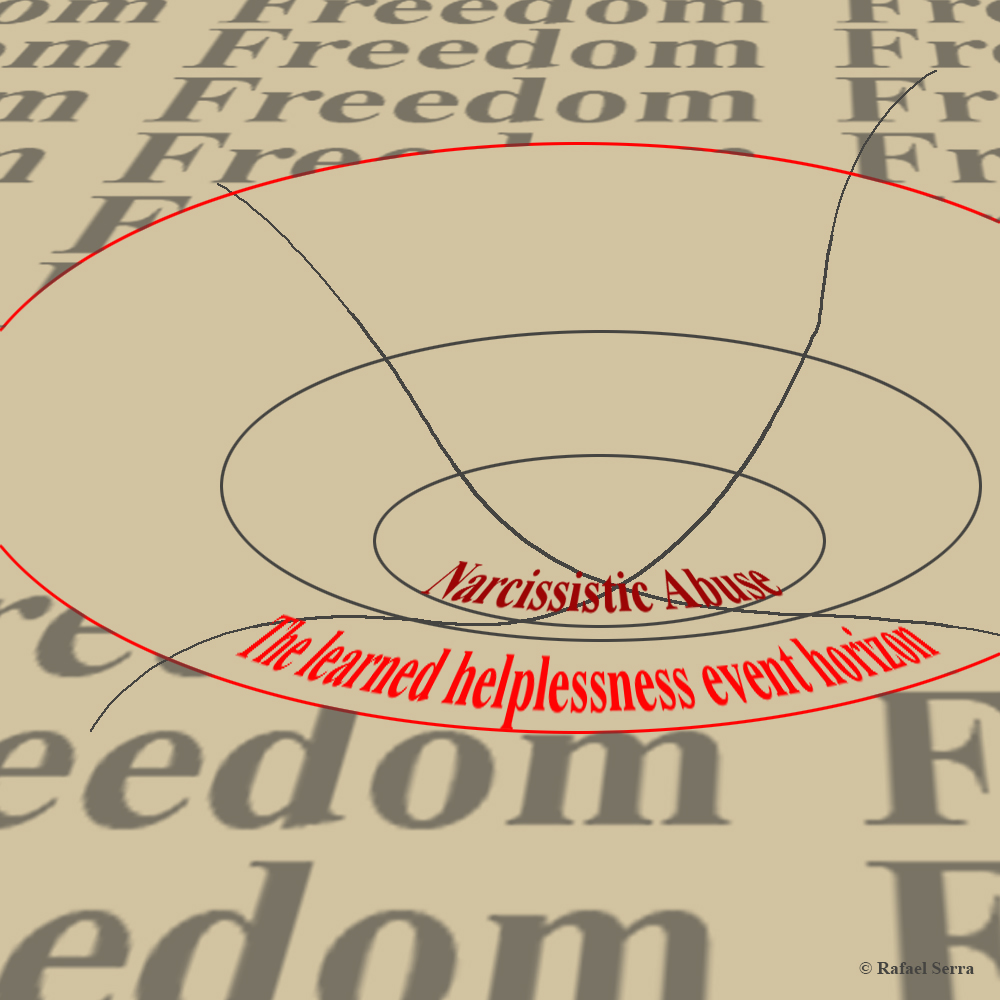
The schizoid position is a limit state of social pressure where individuals are not emotionally flattened and balanced, and that leads to a social and emotional topology with an abyss on the schizoid.
This is too much weigh to carry for one individual. It is highly isolating because it requires immense knowledge, verbal skills and maturity to articulate and navigate such a nuanced and dangerous position.
Such a position is easily exploited and people around will keep having interpretations of self-fulfilling prophecies - as the more they abuse the schizoid the more they'll get a sense that the schizoid is a loser.
But the schizoid is a survivor of the highest order because he has to carry on life with chipped parts and scars and push through. Whereas the majority of people only feel that level of life pressure when society and life in general destroys them psychologically. Only then are people brought down to the same schizoid-esque plateau.
Ironically, the schizoid is an omen of the future, because they are socially pressured to suffer through what those around them can't manage yet but soon will have to. This is a consequence of the natural progression of events being so tragically transformative. Sam Vaknin adresses this, in one of his YouTube episodes, that the world is essentially becoming more schizoid - we are atomizing, as we collapse onto ourselves and our own misgivings.
In this context the individual is put under duress that has to be managed with exercise, relaxation techniques, lifestyle changes, dietary changes, and temperature regulation.
Interoceptive mismatch leaves the individual in a submissive or self-defiant state of pushing himself through to endure whatever life deals and keep solving its problems in order to maintain social coesion and outcome optmiziation. This will lead the individual to neglect the impact on the body and how that could derail his self-efficacy as life's demands force his hand.
In order to regain self-awareness the schizoid individual is required to acheive better control between mental and physical correlates and learn to maneuver this interconnected causal relationship and calibrate it over time. The future oriented mindset must be toned down to give way for a more day-by-day self-care mentality.
The schizoid must abandon a life of exigencies and social expectations (no matter how he is seen) and learn to bring into to focus his somatic and psychological maintenanace.
What's relevant to lay out is that social commerce is geared towards making people feel and get what they expect. It's the ultimate belonging to the waters of social intercourse. But the schizoid lies at the blindspot of that structure; he was organized within that blindspot. And so to maintain individual self-preservation and sovereignty he has to forfeit social previleges and inclusion to advance his survival. And this would all be up to moral debate if this was purely driven by self-interest, but schizoids have a strong moral compass that isn't easily out-argued. This is where society should pay attention that an individual can't simply be cornered and forced to live at the same level of opperation and physical assault when they carry burdens instilled often since early age and still be successful to the same standard as the general population.
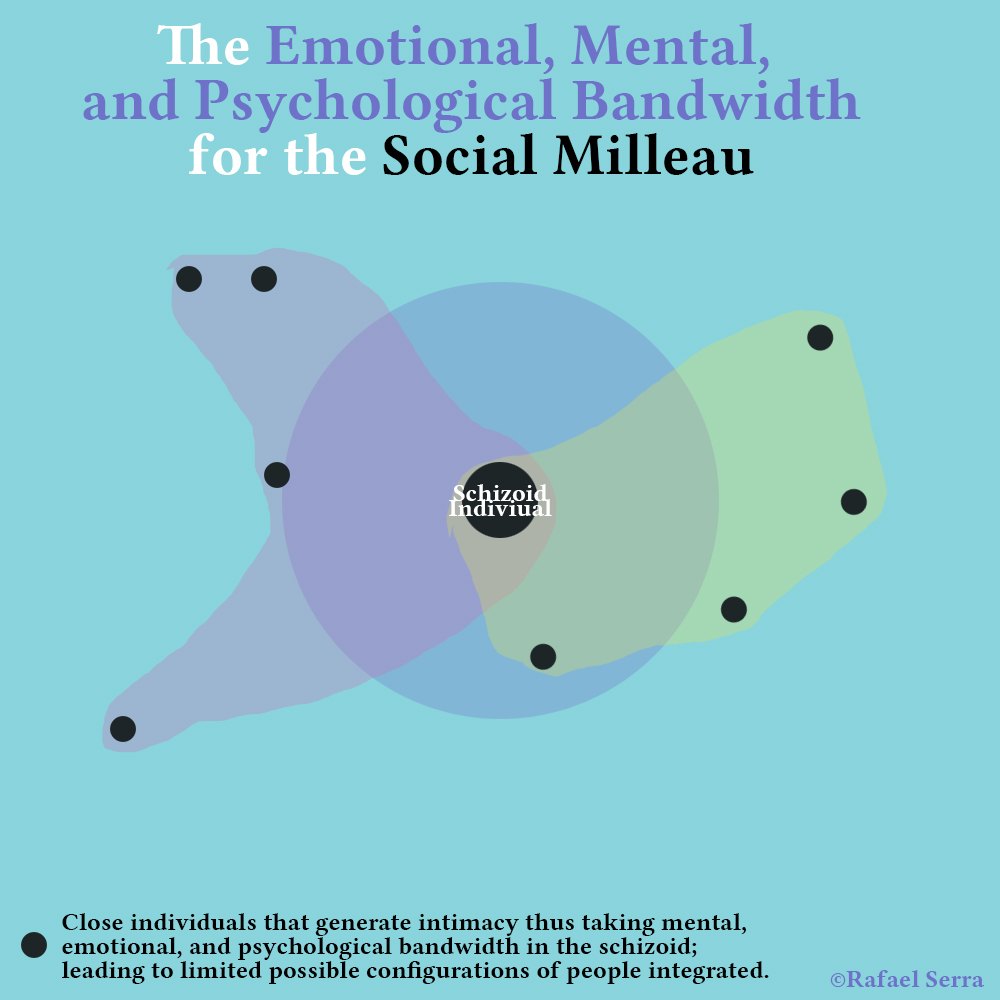
The average schizoid knows there is no arguing with the general populace - for logistical and pay off reasons of ROI - so instead they default to a social minimalist approach. Nevertheless it's highly required that schizoid individuals lead a somatic focused oriented life to counter that modus operandi of lethargy and traumatic somatic states prompted by stressful trauma inducing replicas that instill past nervous system triggers and somatic organizations into recurrence. The body keeps the score and the schizoid will relive it without concious change of habits, interoception regaining strategies, and a psychological organization of self-care and gratitude.
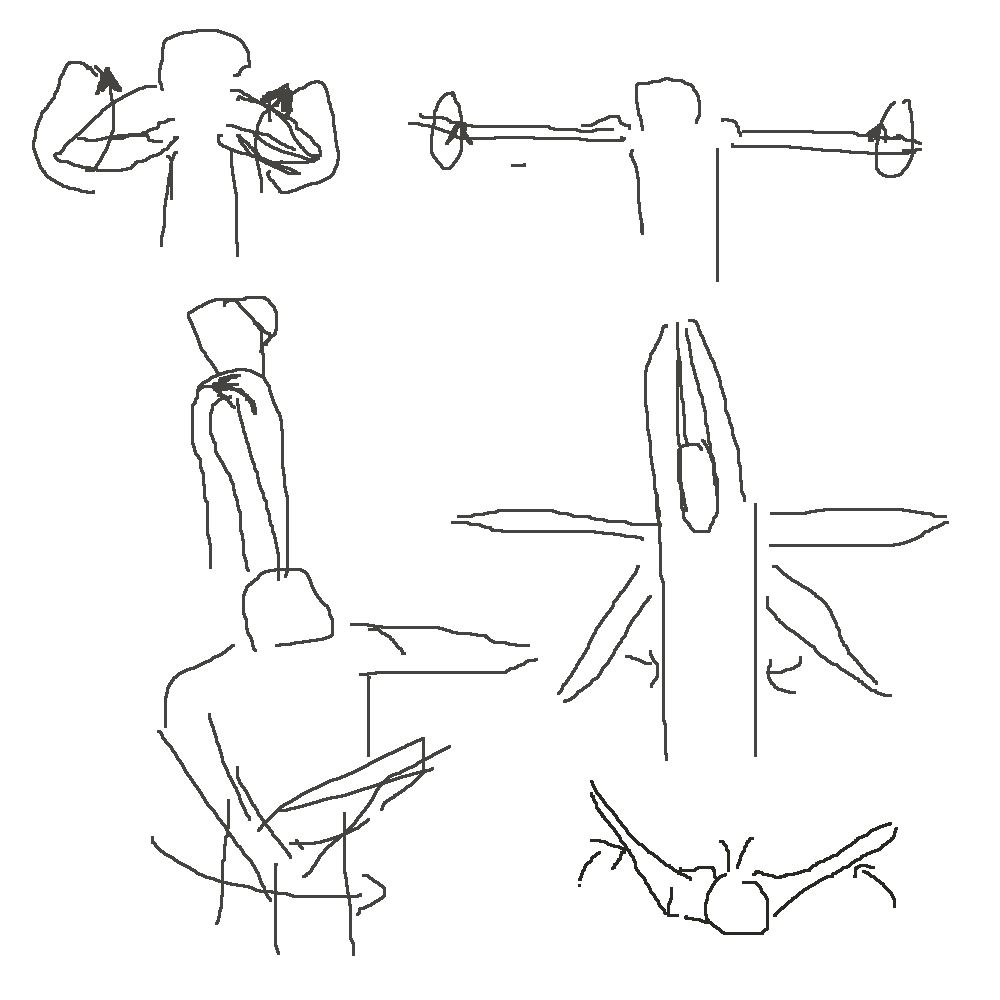
Books like Bioenergetics, yoga, stretching exercises, swimming, back cracking exercises, and even Qigong stances, can be productive additions to instill body states that allow muscles groups, skeleton configurations and tendon elasticity to surface and be regained.
From what I've gathered, schizoids are likely to be some of the most impacted individuals in terms of lack of exercise by our civilized world and work market. The schizoid should be physically invested. We're creatures made for the wild, that have been cornered into isolated office spaces against our very nature that yearns for movement.